
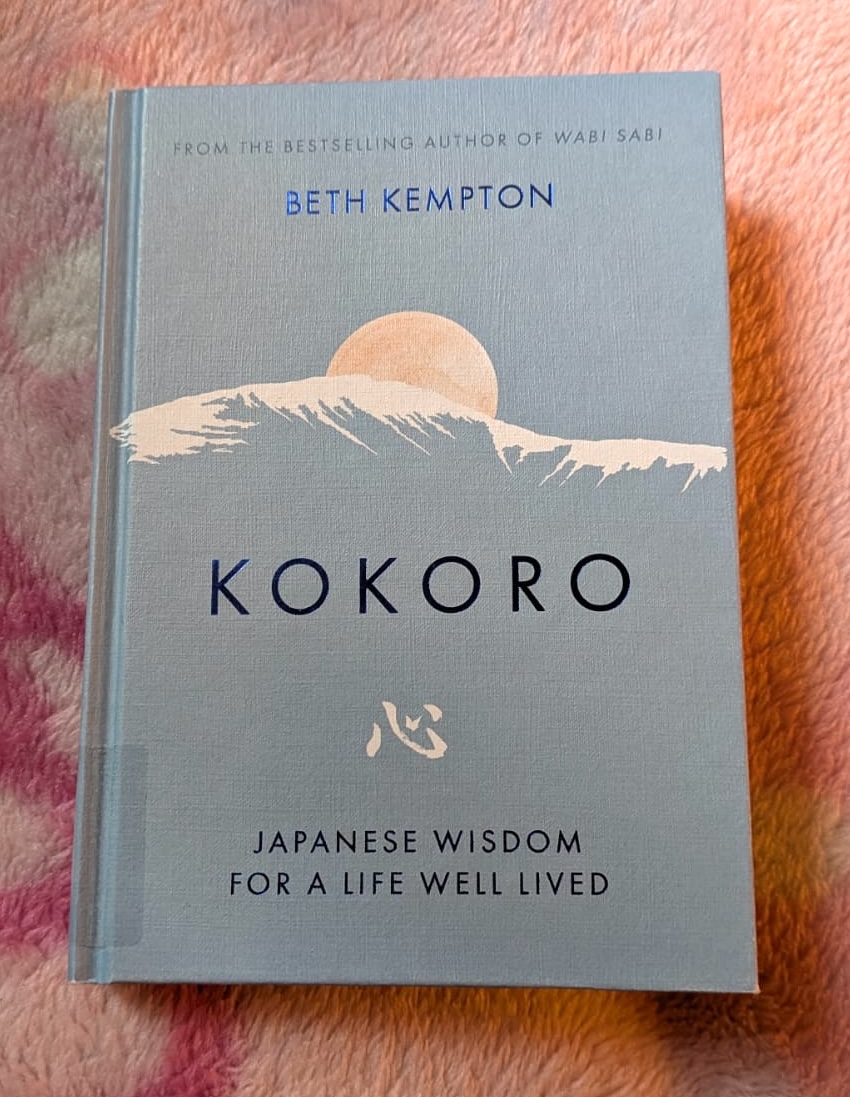
I’ve been reading Kokoro by Beth Kempton, and a few pages about time stopped me completely. Not because I had never thought about time before, but because I had always thought about it in the same way most of us probably do: as something outside of me. Something I have. Something I can spend, save, waste, lose, manage or run out of. We organise our lives around it. We divide it into hours and minutes, fill calendars, set alarms, make plans, complain that we don’t have enough of it and sometimes wish it would move faster. Time feels like this invisible thing travelling alongside us while we live our lives. But what if that is not what time is at all?
In the book, Kempton explores the ideas of the Japanese Zen master Dōgen and his concept of being-time. And then I reached three incredibly simple words: “We are time.” I kept thinking about them. What if existence and time are not separate? What if I don’t have time because I am time? Suddenly expressions I have used my entire life started sounding completely different. “Wasting time.” “Killing time.” “Making time.” If time is something external to me, wasting an afternoon is simply wasting a few hours. But if my existence and my time are inseparable, then wasting my time means something much more uncomfortable: I am wasting a piece of my own existence.
That thought has stayed with me because lately I have been thinking a lot about how I want to live. I think we are constantly encouraged to imagine life somewhere else. When this difficult period is over. When I feel better. When I have solved this problem. When I have changed something about myself. When I have more money, more energy, more confidence, more certainty. There is always another version of life waiting somewhere in the future, and meanwhile the present can start feeling like a waiting room. But the strange thing is that the waiting room is life too. These days count. These mornings count. The hours when I am confused count. The walks, the music, the fear, the stupid little things that make me laugh, the days when I create something and the days when I do absolutely nothing. None of them are happening on the way to my life. They are my life.
Later in the chapter, Kempton writes about meeting a nun and asking her questions about time and how to live well. The answer she receives is essentially to take care of the present moment as well as you can. I love that expression: take care of now. Not conquer it. Not optimise it. Not make it productive enough to justify its existence. Just take care of it. Because this moment has come from everything that existed before it and is already becoming everything that will come afterwards.
Maybe that is what I want to learn: to stop treating the present as something I have to get through in order to reach the part of my life that I actually want. Especially now. Especially when things are difficult. I don’t want to look back one day and realise that I spent years waiting for my “real life” to begin whenever circumstances finally became perfect enough for me to live it.
I don’t know whether I completely understand Dōgen’s idea of being-time. Maybe I’m not supposed to. But I understand what those three words did to me when I read them.
We are time.
And if that is true, then taking care of my time is not really about managing my schedule. It is about taking care of my existence.
Leave a Reply