
In some of my previous Artist Diary posts, I’ve mentioned the return-to-work programme I’m currently taking part in, occasionally talking about the courses I’m attending, my appointments with different professionals and the activities I’m involved in, but I’ve realised that I’ve never really explained what it’s all about.
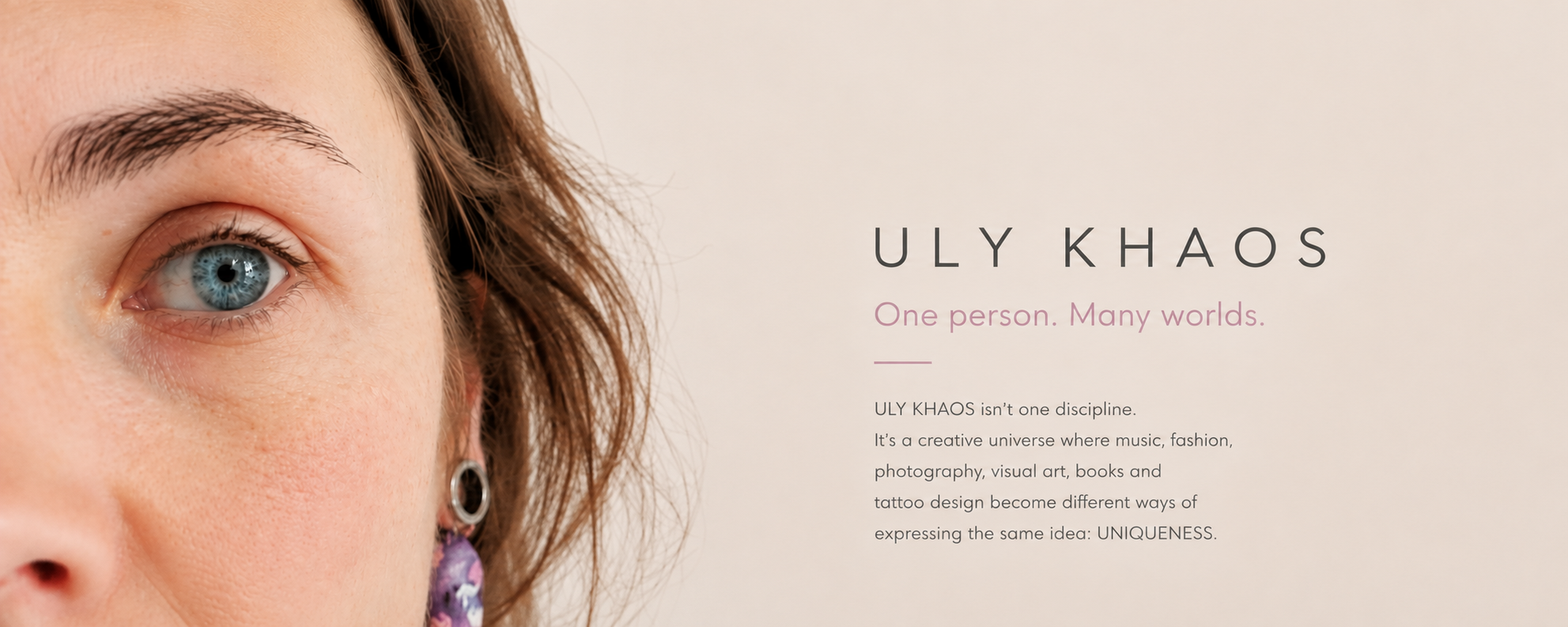
And since it’s an experience I’m thoroughly enjoying, one that’s teaching me a great deal and playing an important role in the development of ULY KHAOS, I thought I’d tell you a little more about it today.
To explain why I decided to take part, though, I need to go back a few years, to when my health problems forced me to stop working. After several assessments with occupational therapists and vocational specialists, I was told quite clearly that I shouldn’t be working, because any kind of employment could make my condition worse.
It wasn’t simply a matter of reducing my hours or finding a less demanding job: at that point, working wasn’t considered compatible with my health. I also knew that, regardless of any future improvements, I was unlikely to be able to return to the ten- or twelve-hour shifts I used to work, so I started thinking about what alternatives I could create for myself.
Art has always been part of my life, and during my illness it also became an important way of coping psychologically with what I was going through. I continued creating whenever I could, making collages, clothes, jewellery and other pieces, and it was during that period that I began thinking about bringing my different artistic interests together into a single professional activity, organised in a way that would allow me to work independently and manage my time according to my physical condition.
The problem, of course, was that I still couldn’t work. But that didn’t mean I couldn’t start preparing something for the future. I thought that if I could dedicate even just a couple of hours to my projects on the days when I felt better, over one, two or three years I might be able to build a foundation to start from when my health allowed it. And so, without knowing how long it would take or when I’d actually be able to return to work, I began developing ULY KHAOS.
It’s been approximately two years, during which I’ve built the website myself, developed the projects, created new work and organised the six creative disciplines that make up my artistic activity: music, fashion, visual art, photography, books and tattoos. It’s been a process of working in small intervals, with days when I could dedicate a few hours to it and others when I couldn’t do anything at all, but over time all those small steps accumulated and ULY KHAOS gradually took the shape it has today.
In August this year, I thought that perhaps I’d reached a point where, with the necessary adjustments and the right support, I could try taking the next step. Not because my health problems had disappeared, but because I’d already built much of what I’d set out to prepare, and I wanted to understand how I could actually begin working through ULY KHAOS while respecting the limitations I still have to deal with.
A few months earlier, I’d heard about a voluntary return-to-work programme and decided to find out more. It’s a six-month programme run by Shaw Trust, a charity that works in collaboration with Jobcentre Plus and Universal Credit, and it’s designed for people who’ve had to stop working because of health problems but would like to explore the possibility of returning.
Participation is entirely voluntary, and there’s no single objective that applies to everyone: for some people, it might mean working ten hours a week, for others starting their own business or perhaps beginning with voluntary work for a charity. The important thing is finding an option that’s compatible with each person’s circumstances and abilities.
I applied through Universal Credit and the Jobcentre, but since I knew someone who’d already participated in the programme and knew I’d eventually be referred to Shaw Trust, I decided to contact them directly as well. In the end, Shaw Trust got back to me first, and by the time the Jobcentre contacted me, I’d already started the programme. I remember the woman from Jobcentre I spoke to being pleasantly surprised by my initiative and enthusiasm, and telling me how lovely it was to see someone so motivated to return to work. So we agreed to speak once a month to check how things were going.
What I particularly like about this programme is that it doesn’t just offer employment advice. It involves different professionals who also focus on physical and psychological wellbeing, because a long-term illness can have consequences that go far beyond being unable to work.
People can lose social connections, become isolated, struggle to imagine a professional future or simply miss having a routine and something to dedicate their time to. The programme takes these aspects into account too, offering different opportunities depending on each person’s needs.
In my case, because my back and joint problems are particularly significant, I’ve been enrolled in an MSK programme, specifically for musculoskeletal conditions. I have a physiotherapist who follows my progress, gives me exercises and monitors how I’m doing, a free six-month gym membership with the possibility of continuing for another two years at a reduced rate, and I’ve also been offered a course of massages to help relieve the severe muscle tension in my back.
Then there’s my work coach, who helps me with the practical and professional aspects of ULY KHAOS, from managing the website and planning projects to courses, training and anything else that might be useful for developing the business. She’s also someone I can talk to about personal difficulties that might affect my progress, and I find it particularly helpful to have someone to discuss my ideas with, not only from a creative perspective but also from an organisational one.
Another part of the programme is delivered by Better Health, which focuses on psychological wellbeing through a holistic approach and offers a variety of courses to choose from. Naturally, I didn’t need much convincing and signed already up for three: “Neurodiversity: Strategies and Tips”, “Fear”, and “Pain Management”. During the neurodiversity course, the coach also suggested that I request some one-to-one support, so I applied, my request was accepted, and I’ll be starting those individual sessions at the beginning of November.
I have to say that I’m finding the whole experience extremely interesting, both because of what I’m learning and the people I’m meeting. One of the nicest surprises has been the reaction of the professionals supporting me when they saw ULY KHAOS. They’ve told me that they show each other the website during their meetings, discuss the different projects and are surprised by how much I’ve created.
More than one person has asked whether I really built the entire website myself, and of course it makes me very happy to see my work appreciated, especially considering the circumstances in which it was created. On the other hand, when someone sees everything together, it can look as though I’ve done an incredible amount of work, whereas to me it’s simply the result of two years of small steps, a few hours here and a few hours there, interrupted whenever my health wouldn’t allow me to continue.
But beyond the compliments, which are always lovely to receive, working with my coach is helping me make some concrete decisions. When I developed ULY KHAOS, for example, I included practically every idea that came into my head on the website, without worrying too much about how many activities I’d actually be able to manage.
In the music section alone, I’d planned eight or nine different projects, all interesting, all exciting and, naturally, all things I wanted to create. Then, after discussing how much work each one would involve and which were better suited to my physical condition, I decided to make a selection and focus on three.
The first involves creating soundtracks for events, performances and other people’s projects, something I can do from home with my computer and music equipment, even from bed if necessary, as I’ve already done in the past with some live painting projects. The second is Words Out Loud, in which I transform phrases and passages from my books into electronic music tracks and DJ sets, while the third is London Remixed, a project involving audiovisual DJ sets that take listeners on a journey through London by combining music and images.
Three music projects instead of eight or nine already feels like a reasonable reduction, although then I remember that music is only one of ULY KHAOS’s six artistic disciplines, and I start wondering whether perhaps I should scale things back a little further!
And this brings me to something I’ve already talked about in other Artist Diary posts, but which has inevitably come up again during this experience: my difficulty managing the enormous number of things I’d like to do compared with what my body actually allows me to do.
Before becoming ill, I was used to working long hours, pursuing numerous activities, constantly learning new things and filling my days with commitments, and although I’ve learned a great deal over the past few years about managing my energy and respecting my limitations, my enthusiasm certainly hasn’t diminished along with my physical abilities.
Apparently, this enthusiasm is one of the things that stands out most to the people supporting me. They’ve told me several times how pleased they are with my participation, because they often work with people who understandably struggle to imagine returning to employment because of pain, limitations or a loss of confidence in their abilities, whereas I keep asking about additional courses, suggesting activities and looking for new opportunities. The problem is that, along with the compliments, I almost always receive the same recommendation: be careful not to overdo it.
And I certainly can’t say they’re wrong. I know all too well my tendency to get carried away by something that interests me, especially when I’m feeling well enough to do it, and I also know what the consequences can be when I don’t manage to stop in time.
It’s something I’ve been working on for years and something I clearly still need to work on, but I find it helpful that the people involved in this programme are also encouraging me to keep it in mind when we make decisions about which projects and activities to develop.
And that’s exactly what I’d like to achieve during these six months: not simply accumulating more courses, more projects or more things to do, but understanding how to organise ULY KHAOS so that I can actually work, even if it’s only for a few hours a week, without compromising the progress I’ve made with my health.
I’ve already spent two years building this activity, and I certainly don’t lack the desire to take it forward. What I need to learn is how to do that in a way that’s compatible with my life as it is now, even if it means modifying some projects or temporarily setting certain ideas aside.
In the meantime, I’m enjoying everything the programme has to offer, from training opportunities to physical and psychological support, as well as the chance to discuss my plans with professionals who take both my difficulties and my goals seriously.
I don’t yet know exactly where I’ll be at the end of the six months, or how many hours I’ll actually be able to work, but I’m happy I decided to participate and, above all, that I’ve found a programme that offers practical support during this stage of my life.
For two years, I’ve worked on ULY KHAOS whenever my health allowed it, hoping that one day I’d be able to turn all that work into something I could pursue professionally. Now I’m trying to understand how to take the next step, without forgetting that my health has to remain part of every decision I make.
And if, by the end of these six months, I’ve learned how to organise my work better, choose which projects to pursue and, most importantly, recognise when it’s time to stop, I think that will already be an important achievement. Because knowing myself, the problem will never be finding something to do, but managing not to want to do everything at once.
Leave a Reply