
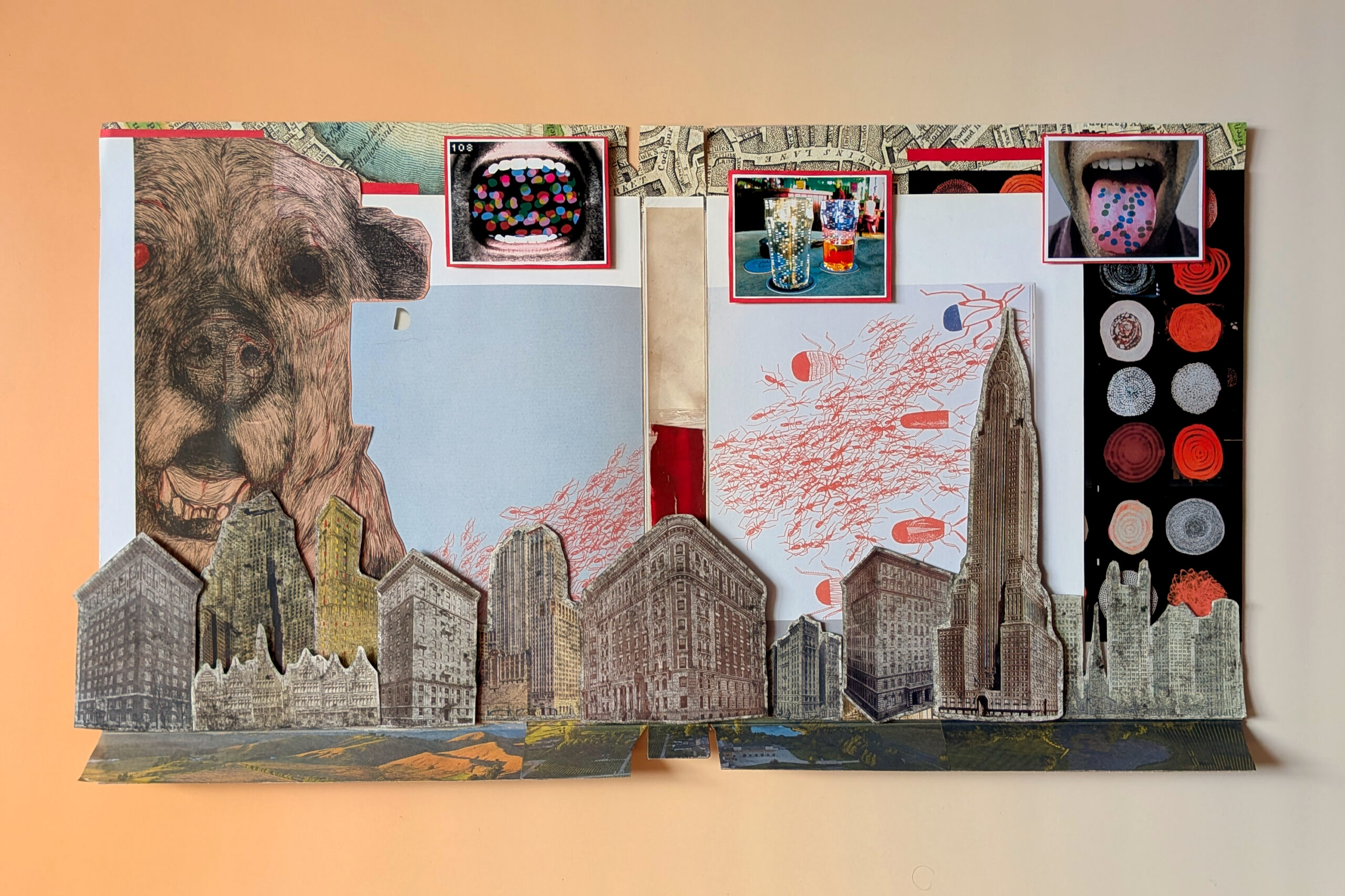
People often ask what London gave me, and for a long time I never really knew how to answer that question.
The easiest response would be to talk about practical things: the opportunities, the work, the people I met. But the truth is that what happened to me here was much harder to explain, because London didn’t simply become the city where I lived. Somehow, over the years, it became the place where I slowly started meeting parts of myself that I had never truly known before.
I grew up in Tuscany, surrounded by beauty that I took for granted because it had always been there. Rolling hills, familiar streets, traditions, habits, expectations. Like everyone else, I inherited an idea of how life was supposed to unfold. There were certain paths that seemed reasonable and others that appeared reckless. There were things people admired and things they judged. There were identities that made sense and identities that were harder to understand. Even when nobody explicitly tells you who to become, you absorb those messages without realising it. They settle quietly inside you and begin to shape the limits of what you believe is possible.
When I first moved to London, I wasn’t trying to reinvent myself. I wasn’t arriving with the dramatic intention of becoming a completely different person. I don’t even know if I could have explained what I was looking for at the time. I think I simply needed space. I needed distance from everything that had always defined me. I needed to step outside the environment that had taught me who I was supposed to be and discover what remained when those familiar reference points disappeared.
At first, it was overwhelming. London is loud, chaotic, fast and wonderfully indifferent. Nobody knows where you’ve come from, nobody has known you since childhood, and nobody expects you to remain exactly as you’ve always been. For someone who had spent much of her life trying to fit into other people’s expectations, that kind of freedom was both exhilarating and terrifying.
I remember becoming aware of how many different ways there were to exist in the world. I met people from countries I had barely heard about before. I listened to languages I couldn’t recognise. I met people who had changed careers in the middle of their lives without feeling embarrassed about starting over. People who dressed however they pleased. People who loved openly and unapologetically. Artists who created because they needed to create rather than because they had been given permission to do so. People who occupied space without constantly questioning whether they deserved to be there.
It unsettled me more than I expected, because when you have spent years adapting yourself in order to belong, freedom can initially feel like chaos. You suddenly realise that many of the things you believed were fixed parts of your personality might actually have been survival strategies. You begin to wonder how much of yourself was chosen and how much was simply inherited.
I think this is why living in London changed me so profoundly. Not because the city taught me who to become, but because it allowed me to ask questions I had never given myself permission to ask before.
Who am I when nobody already knows my story?
What do I actually want?
What excites me?
What makes me feel alive?
What would I choose if I weren’t so busy trying to be understood, accepted, approved of, or loved?
Some of the answers arrived slowly. Others frightened me. There were aspects of my identity that I had barely allowed myself to acknowledge before. My relationship with creativity deepened because I no longer felt the need to fit it into a neat category. My understanding of my own sexuality evolved because I found myself surrounded by people who showed me that there wasn’t only one acceptable way to love, desire or exist. I discovered that curiosity was often a much kinder guide than shame.
Most importantly, I stopped believing that I had to choose a single definition of myself.
For years I had struggled with the question people love to ask: “What do you do?” As if a human being could be summarised in one sentence. As if identity needed to be concise in order to be valid.
But London introduced me to people who contained multitudes, and gradually I realised that perhaps I did too.
I could be a DJ and a writer. I could make clothes and jewellery and take photographs. I could create collages and learn to tattoo. I could be soft without being weak, rebellious without being hard, playful without being superficial, emotional without being irrational. I didn’t have to justify every contradiction within me because perhaps they weren’t contradictions at all. Perhaps they were simply evidence that human beings are more complex than the boxes we try to place them in.
Looking back now, I don’t think London transformed me into somebody else.
The creativity was already there.
The sensitivity was already there.
The restlessness, the imagination, the desire for freedom, the refusal to fit neatly into categories, the fascination with people and stories and art and music — all of those things had always existed inside me.
What changed was that, for the first time, I stopped treating those parts of myself as problems that needed solving.
I began to see them as truths that deserved space.
I don’t believe that cities save people. Healing is rarely that simple, and transformation is almost never as romantic as we would like it to be. We still carry ourselves wherever we go. We bring our fears, our wounds, our patterns and our histories with us.
But I do believe that certain places enter our lives at precisely the moment we need them. Not because they rescue us, but because they expand our imagination of what is possible. They hold up a mirror and reflect back versions of ourselves that we had never dared to consider.
For some people, that mirror might be another person. For others, it might be a book, a piece of music or a work of art.
For me, it was London.
Because London didn’t teach me how to become someone new.
It simply gave me enough freedom, enough distance and enough courage to become more fully myself.
And perhaps that is the most extraordinary kind of transformation any of us can experience: not the experience of becoming somebody else entirely, but the quiet and unexpected realisation that, after years of searching, you have finally found your way back home to yourself.
Leave a Reply