
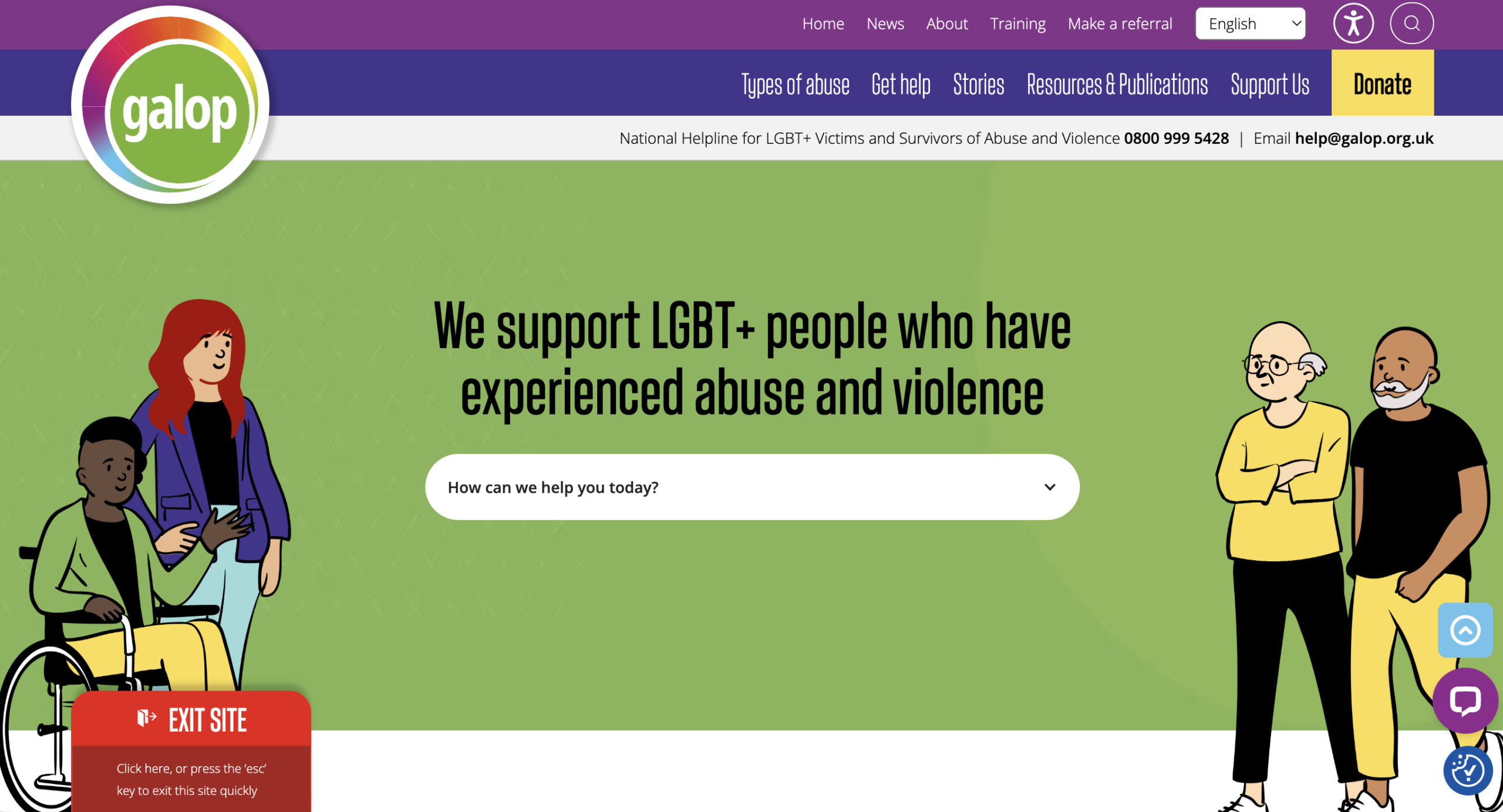
This week I discovered Galop. I wish I had discovered them under different circumstances. Galop is a UK charity supporting LGBT+ people who experience abuse, domestic abuse, stalking, sexual violence and hate crime. I contacted them because recently I found myself in a situation where I needed help, and even writing that sentence still feels strange.
There are certain words that are incredibly easy to understand when they belong to somebody else’s story and incredibly difficult to use when they belong to your own. Abuse. Stalking. They are big words. Serious words. Words that somehow seem to belong to situations more dramatic, more obvious, more extreme than yours. When you are inside something, it can be surprisingly difficult to see it clearly. You analyse, minimise, explain, question yourself. You think maybe you are exaggerating. Maybe you misunderstood. Maybe it isn’t serious enough. Maybe you should simply be able to deal with it yourself.
Then you speak to somebody whose job is to understand these situations, and something changes.
What affected me most about contacting Galop was simply being taken seriously. I didn’t have to arrive with a perfectly organised explanation of what had happened or already know exactly what words to use. I could tell them what I had experienced, what was happening and why I was scared, and they listened. Having people specialised in abuse and stalking recognise the seriousness of what I was describing was strangely grounding. Not because I wanted those words to apply to my life — I absolutely didn’t — but because sometimes clarity is safer than minimising something because the truth is uncomfortable.
It also made me think about how important organisations like Galop are specifically for LGBT+ people. Our relationships and experiences do not always fit the traditional images people have in their heads when they hear the words “domestic abuse”. Sometimes even we don’t recognise ourselves in those images. Having a service that understands LGBT+ lives, different kinds of relationships and the particular ways abuse can appear within them means that you don’t have to spend half your energy explaining your identity before you can even begin explaining what happened.
I am writing about Galop today partly because I am grateful they exist, but also because perhaps somebody reading this will need their name one day. I hope you never do. But if something in a relationship or in somebody’s behaviour is making you frightened, controlled, unsafe or unable to move freely away from them, you don’t have to wait until you have found the perfect definition for what is happening before asking for help. You are allowed to ask somebody who understands these things to help you make sense of it.
I am still processing my own experience. I don’t have a neat conclusion for it, and I don’t think I need one yet. But I have learned something important this week: sometimes asking for help is not admitting that you are weak. Sometimes it is the moment you finally stop trying to carry something alone.
And sometimes the first step towards protecting yourself is simply allowing someone to say: yes, this deserves to be taken seriously.
Galop: galop.org.uk
Leave a Reply