
Yesterday, I told you that I’m disabled. I told you about my first jewellery-making class, about a tiny piece of copper, a jeweller’s saw and a hand that suddenly couldn’t do what I needed it to do. But after writing that post, I realised there was something else I wanted to say. Because saying “I’m disabled” is very simple. Living with a disability is not.
A few years ago, I was healthy. I didn’t grow up learning how to live with a disability. I had a body that I trusted without even realising I trusted it. I made plans assuming I would be able to follow them. I walked without thinking about walking. I breathed without thinking about breathing. There were hundreds of things my body did every day that I never considered extraordinary, because why would I? They were simply there. Then I became ill, and my life changed completely.
One of the hardest things for me to live with is something that might sound incredibly simple: I am no longer always the person who decides what my day is going to look like. I can decide that next Tuesday I’m going somewhere. I can be excited about it. I can organise everything. And then Tuesday arrives and my body says no. I might be in too much pain. I might be completely exhausted. I might simply not be physically capable of doing what I planned. And this still pisses me off enormously.
There are things about disability that I have learned to live with better over time. There are things I have adapted to. But this one still makes me incredibly angry. I want to decide what I do with my life. I have an enormous appetite for living. I want to walk around cities, travel, make things, learn things, go to exhibitions, make music, meet people, start ridiculous projects and follow ideas just because they make me curious. And sometimes my body simply says: No. Not today. Learning to live with that has been incredibly difficult.
But there was another kind of loss that I had never imagined: discovering that things you assume belong to you forever might not. At one point during my illness, I couldn’t walk properly on my own. I had to learn to walk again. I had to learn to breathe again. Even writing those sentences still feels strange, because walking and breathing are not things I had ever thought of as abilities. They were just things my body did. Until it didn’t. I think illness taught me something I would rather never have learned: just because your body can do something today doesn’t mean you are guaranteed to have it forever.
And while I was losing abilities, my body was changing physically too. I lost eleven kilos because of my illness. But it wasn’t simply weight loss. I watched different parts of my body transform, and I found that incredibly difficult to deal with. There is one particular example I want to talk about even though, strangely, I still feel slightly embarrassed talking about it: my breasts.
I never had particularly large breasts and I never wanted them. I had my small breasts, I liked them, they were mine, and honestly I had never spent that much time thinking about them. Then my body changed. My breasts almost completely disappeared. It wasn’t simply I lost some weight and my boobs got a bit smaller. They looked completely different. It felt as though almost nothing was left except my nipples, which even seemed to sit differently on my body. And I was devastated.
I know. With everything else that was happening to me — difficulty walking, difficulty breathing, pain, illness — being devastated about my breasts can sound incredibly superficial. I thought so too. But I couldn’t look at myself. My periods had also stopped, and there were hormonal things happening alongside everything else. My body was changing everywhere at once, while at the same time it was becoming unable to do things it had always done. I think the whole experience became completely overwhelming. It wasn’t one change that I had time to process before dealing with the next. It was my body becoming unfamiliar while I was still living inside it.
Recently my medication changed and I started taking something containing oestrogen. And slowly, my breasts came back. My breasts. My stupid little breasts. And when I saw them looking like they used to, I cannot explain the joy I felt. I was so happy. And then I felt almost embarrassed about how happy I was. Really? After everything I had been through, this was making me this happy?
But I don’t think it was really about having nicer breasts. I wasn’t celebrating suddenly becoming more attractive. I was looking at a part of my body and recognising it again. It was mine. And I don’t think I need to apologise for the happiness that gave me.
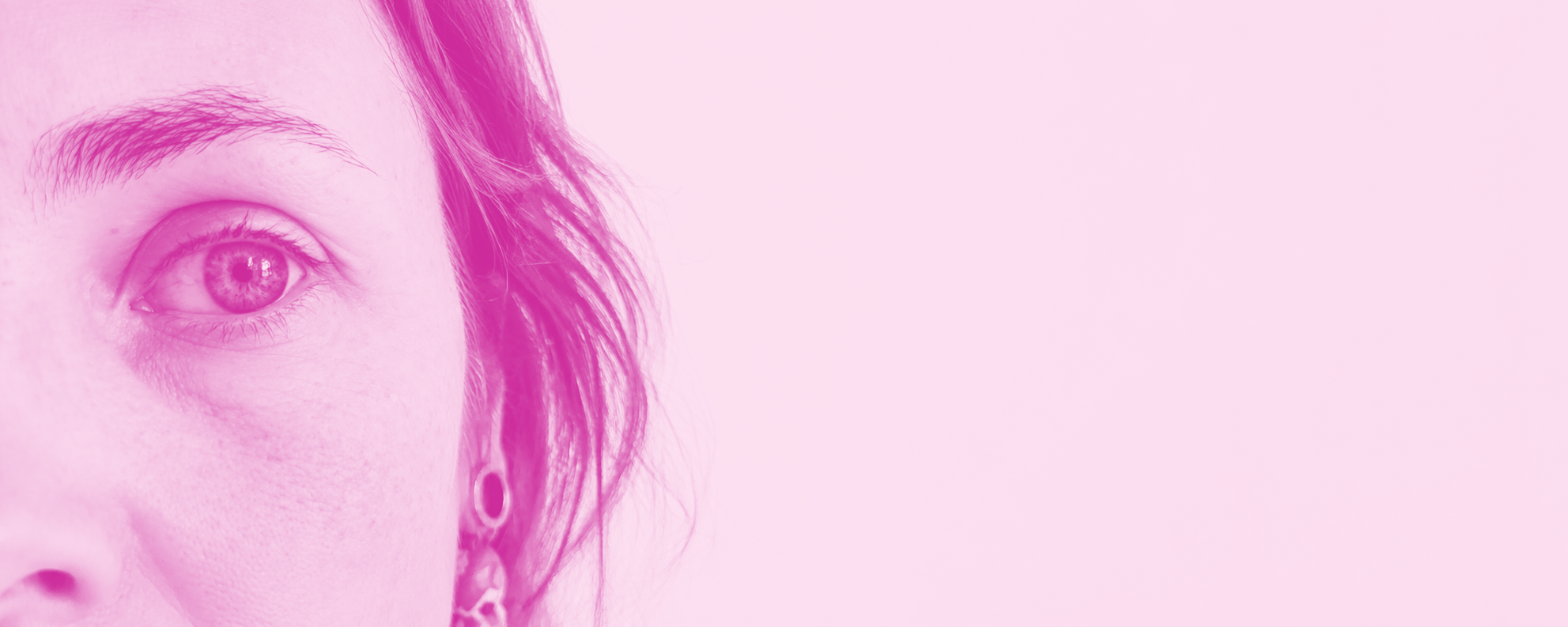
There was another physical change that affected me in a completely different way: my face. There is a particular face that illness can give someone. I don’t know how else to describe it. People who have been seriously ill, or who have watched someone they love become seriously ill, might know exactly what I mean. That grey colour in the skin. The pain written across the face. That particular look where you can see someone and immediately think: That person is not well.
I saw that face in the mirror, and that was hard. Not because I thought I looked ugly. That isn’t what I mean. I looked ill. I could see the illness on my own face. I could see the suffering there.
Most people in my life never saw that version of me. When I was at my worst, I isolated myself. Partly because I didn’t want people to see me like that. But there was another reason too: I was furious. I was furious with what was happening to me and furious with the world. I was irritable and angry and I didn’t want to throw that anger at other people, so I withdrew. And where I was at the time, there wasn’t really anyone around who could have done much to help me anyway. So I went through the worst part of it largely alone.
People saw me afterwards. They might have seen me a year or two later, when I was walking again, when I was outside again, when I looked more like myself. They didn’t see me when walking across a room was a problem. They didn’t see me struggling to breathe. They didn’t see the grey face in the mirror. They didn’t see the body I was trying to understand while it changed underneath me. They saw the after.
Except there isn’t really an after. That might be one of the strangest things about living with an “invisible” disability. Someone can look at me now and see a woman walking around London in bright colours and assume that whatever happened must be over. It isn’t. My life is infinitely bigger than my illness, but my illness is still part of my life. Sometimes quietly. Sometimes so loudly that it decides the entire day for me. Sometimes it disappears into the background enough that I almost forget about it, and then something happens — like trying to hold a piece of copper during a jewellery class — and there it is again.
I wish I could end this by saying that I have accepted everything. I haven’t, and actually I don’t want to pretend that I have. There are things I have accepted. There are things I have adapted to. There are things I can talk about now that once made me cry. There are other things that still make me furious. And occasionally something new happens and knocks me down all over again.
What I have learned about myself isn’t that I’m endlessly strong or endlessly positive. I’m not. Sometimes I collapse. Sometimes I cry. Sometimes I’m angry. Sometimes I need to spend a day in bed being completely fed up with the whole thing. What helps me is what happens afterwards. Eventually, when I can, I start looking around and thinking: Okay. This is where I am. What can I do from here?
When I couldn’t do things the way I used to, I started finding other things I could do. Art became part of that. Creativity became part of that. ULY KHAOS eventually grew out of that. And yesterday, when my hand couldn’t hold a piece of copper, eventually my brain started looking for clamps.
That doesn’t make illness beautiful. It doesn’t make me grateful for it. And I certainly don’t believe I needed to become ill in order to learn some profound lesson about life. I would quite happily have learned whatever lessons I needed without all this shit. But this is the body I have now, and this is the life I have now. And I really, really want to live it.
Not a smaller version of it. Not a life spent waiting for some imaginary day when my body will finally allow me to start living again. This one. The messy one. The unpredictable one. The one where sometimes I make plans and my body destroys them. The one where sometimes I have to invent another way of doing something everybody else can do without thinking. The one where I occasionally look at my breasts and feel ridiculously happy simply because I recognise them.
I’m still going to get angry. I’m still going to have days when I hate it. I’m still going to crash sometimes. And then, when I can, I’ll get up and ask the same question again: Okay. What can I do from here?
Leave a Reply