
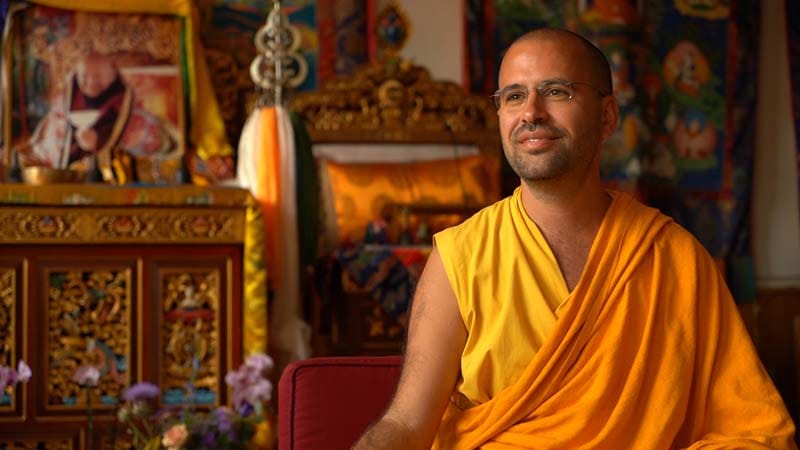
Years ago, when I was attending Buddhist classes, I heard a question that somehow stayed in my head. I don’t remember the exact words anymore, but the idea was something like this: if you lose a foot, are you still you?
Obviously, yes.
Okay. What if you lose your whole leg? Still you. Both legs? Still you. An arm? Still you.
And this is where a question that sounds almost stupid starts becoming a little disturbing, because if I can remove pieces of my body and I continue to be me, then where exactly am I?
Apparently, I’m not in my foot. I’m not in my leg. I’m not in my arm. So maybe I’m in my brain. That feels like an easy answer, until you start thinking about that too. Am I my memories? If I forget something that happened to me, do I become slightly less me? I have forgotten enormous parts of my life and yet every morning I wake up completely convinced that I am the same person who went to sleep the night before.
Maybe I’m my personality, then. But that doesn’t work particularly well either. I’m not the same person I was twenty years ago. There are things I believed then that I don’t believe now, things I wanted that I no longer want, people I loved who are no longer part of my life, fears I have lost and parts of myself I discovered much later. My body has changed, my thoughts have changed, my relationships have changed, my ideas have changed, even the story I tell myself about who I am has changed. And still, through all of those versions, I keep using the same word: me.
So what exactly am I referring to?
The question I heard all those years ago was connected to a Buddhist idea usually called anattā, or “not-self”. One of the ways Buddhism explores it is by asking us to look for this permanent, independent thing we call the self. Where is it? Can we actually find it?
There is an old Buddhist text called the Milindapañha, The Questions of King Milinda, which contains a conversation between King Milinda and a monk called Nāgasena. The king asks who Nāgasena actually is. Is he his hair? His skin? His body? His feelings? His perceptions? His consciousness? Nāgasena eventually uses the example of a chariot. What makes a chariot a chariot? Is it the wheels? The axle? The frame? Take the pieces apart and at what precise point does the chariot disappear?
We have a name for the whole thing, but finding the actual thing behind the name is much harder.
And apparently humans have been thinking about this for a very long time, because more than two thousand years later I can sit here and ask exactly the same annoying question about myself.
If I lose a leg, I am still me. If my body changes, I am still me. If my beliefs change, I am still me. If some memories disappear, I am still me. If I become someone my twenty-year-old self would barely recognise, somehow I am still me.
Maybe the problem is that I keep imagining “me” as if it were an object. Something solid hidden somewhere inside my body that has travelled intact from childhood until today. Maybe there isn’t a tiny permanent version of me sitting somewhere behind my eyes controlling everything. Maybe being me is not a thing I possess. Maybe it is something that is constantly happening: body, memories, thoughts, experiences, relationships, sensations, all appearing and changing and becoming something else.
I actually find that idea strangely beautiful. Because if there is no completely fixed version of me that I am required to preserve forever, then changing doesn’t necessarily mean losing myself. Maybe change is part of what a self has always been.
But I still have the same question I heard all those years ago.
If everything that makes me “me” can change, what exactly is the thing I keep calling “I”?
Leave a Reply